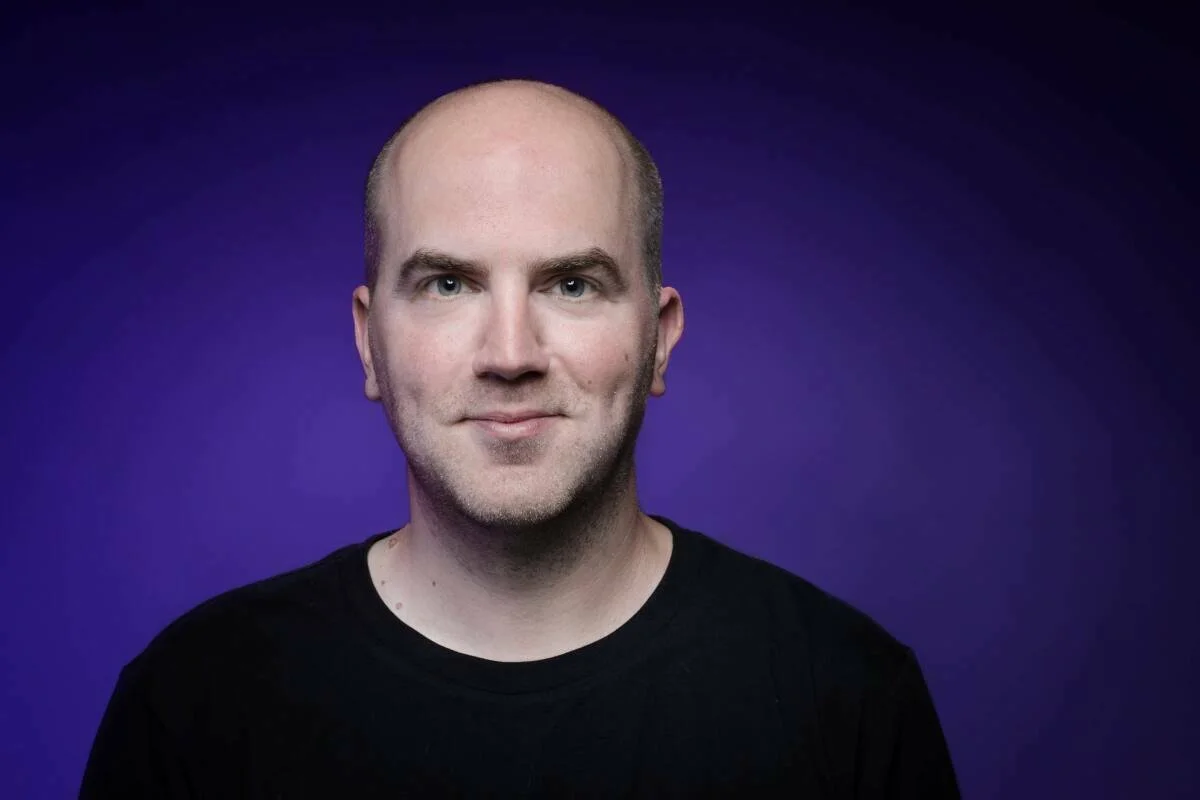
Sam Watts - Composer of Tip Toe, The Traitors, The Box…
Genuinely when I started sharing reviews and reflections on here, I never thought I’d have the privilege to interview an actual, proper composer, but thanks to his kindness, generous nature and all round passion for making music for the screen, Sam Watts has made that happen. As composer of UK phenomenon The Traitors and the latest drama Tip Toe from acclaimed writer Russel T Davies, Sam has created music that is staggeringly relevant. It was a delight to hear more about his passion, insight and process.
Happy reading!
Your score for ‘Tip Toe’ is great, both within the context of the show but also as a listening experience. I know you’ve worked with Russell previously but how did you come to be involved in the project? What were your initial conversations like with Russell about what you both wanted the music to achieve?
I have, October 2026 actually marks our 20th year of working together, which makes me feel incredibly old (and very lucky). I was actually approached about Tip Toe by Phil Collinson (who I also first worked with 20 years ago). He told be a little about the show and sent me a couple of the scripts. I then pitched and had some conversations with various people, including the lovely Peter Hoar (director) about what we might do for the show. Luckily for me, they decided to go with me. Early on, it was mostly conversations with Phil and Peter about the music – feelings we wanted, sounds we might like, lots of experimenting. I know Russell’s music tastes quite well.
We all wanted plenty of queer joy, some cheekiness and a lot of warmth in the score, but we also all knew that it’s a thriller and a very dark story, so also needed plenty of those elements. It did take us quite some time to settle on a sound for the show, but we got there in the end. It became clear that the strings and voice were going to lead it, along with some darker synths and percussion. I was very aware not to make Clive a monster, so I kept the darkness to a minimum with that, and also really enjoyed being able to tell his story in episode three, where we see more of why he is how he is.
The track “Do You Love Him?” is so important in Episode Two as it controls the tone of the scene and how we feel about Leo and George in that moment - how did you achieve such emotive work? Can you share a little about your process for that particular scene?
It was a really tough scene and we ended up on version three before we were all happy. Interestingly, I don’t think I really do a lot in that cue. So much of it was in the performance by Alan and Jackson that I just followed their lead. It needed to feel warm and grown-up, so the opening is very simple and mostly synth-based. I didn’t want to distract from the text messages. That actually took the longest to write because it’s deceptively hard to keep music simple. Then once we really get to the meat of the conversation I wanted the strings to take over. There are a lot of suspensions – notes held over from previous chords – and a soaring melody, with relatively wide voice spacing. There was originally a piano on there, too, but I felt that was over egging the pudding, so dropped back to just strings. That was part of the keeping it simple thing – it extended to just how many instruments I wanted to use as well as how many notes they played. Those few bars where George types “but I love him” is some of the most beautiful music I think I’ve ever written – and it’s apt because it’s such a beautiful moment. That queer elder feeling the pain of the queer teen he was and seeing it repeated.
Then the chords get closer together for the end to emphasis the warmth and emotion coming from Leo. I brought in more low notes to emphasise his conviction. I also wanted the conversation to end feeling unfinished (because George doesn’t reply and Leo is just left in his chair, waiting), so it ends on an interrupted cadence of sorts to leave it feeling unfinished.
Working with someone like Russell must be a gift in terms of characterisation, how did you approach the different characters in terms of musical styles when it came to their themes and key moments in the series? I loved how you used guitars to really explore the different aspects of Clive’s character.
Absolutely. And add Alan, David and the rest of the fantastic cast and Peter’s directing to Russell’s words and the characters are there in full 3D for me. Scoring the show really was more about finding a way to support what was already there and hopefully enhance it without pushing it too far. Leo, I knew needed to be fun and speedy. He’s a mile-a-minute and can barely stop himself from spinning a yarn. He’s also a fierce defender of his staff and community, so I wanted a trans voice in there, which is how I landed of having ILĀ as my singer. I’d initially started with the backing to the melody being much more clubby, but we soon realised that wasn’t going to work, so I reworked it and put the strings on there and suddenly; there was Leo.
There’s a recurring use of The Buzzcocks in the show, which represents Clive’s youth, so I wanted to keep that vibe going for his music. My brother, Dan, played guitars for me and I had a friend Richard Orpheus Campbell play the drums for the series and that gave Clive this punk edge. It was then fun to explore the softer side of him, the more human side, in episode three. I introduced acoustic guitar, piano and strings to help the audience see that he’s not a monster, just a very lost man.
George is all youthful exuberance. I wanted to mirror Leo’s music in his music to strengthen the link between them, so he’s all cheeky vocals and string arpeggios. I was actually really struggling with the beginning of the scene where he’s bunking off school, so I got my brother Dan to co-compose that with me. And the recording session was quite the workout for the Northern Film Orchestra – it’s almost like doing your warm-up arpeggios.
Are there any moments in the series or tracks from the score album that you are particularly proud of?
Probably “They Really Hate Us”, which is actually one of the first cues I wrote for the show. It’s where I came up with the idea of having the strings represent the passing of time (short, quick chords and arpeggios for the fun stuff when time passes quickly, and long, drawn out chords for when things aren’t going so well and time seems to slow). It’s also a beautifully written speech and Paul’s performance is breathtaking. It’s very difficult to score a speech like this. You don’t want to overwhelm it, so I was constantly reigning myself in. There was a version with march-like drums on early in the process, but we got rid of those because they were too much. This is also the cue that we first experimented with extended techniques in the recording session. Having the players pick their own way of playing and slowly morphing from a nice, ordinary string sound to something much more sinister and unsettling. It worked so well it sort of became its own theme through the score because I wanted to use it more.
More generally, why do you believe people connect so strongly with film and television score music? Who have your influences been? What have been your standout scores in 2026?
I think because the good stuff tells a story. We’re all interested in and drawn to good stories, and film and television music helps tell those stories. There’s drama, emotion, the works.
I’ve been hugely influenced by lots of people. I think the biggest influence on me is probably George Fenton, who sadly died recently. He was an astounding composer who taught me a lot and really influenced my sense of melody and harmony.
As for standout scores, I don’t actually watch a lot – it’s terrible, I should watch more. But I think the score for The Odyssey is really great.
It’s been great revisiting more of your music after enjoying ’Tip Toe’ so much, your score for ‘Traitors’ is now iconic - I hope you were given an honorary cloak! What future projects do you have lined up?
Thank you, that’s very kind. It’s been a busy couple of years with Traitors, Tip Toe and The Box. I’m currently working on a new TV show, which is going to really great but I sadly can’t say anything about.